
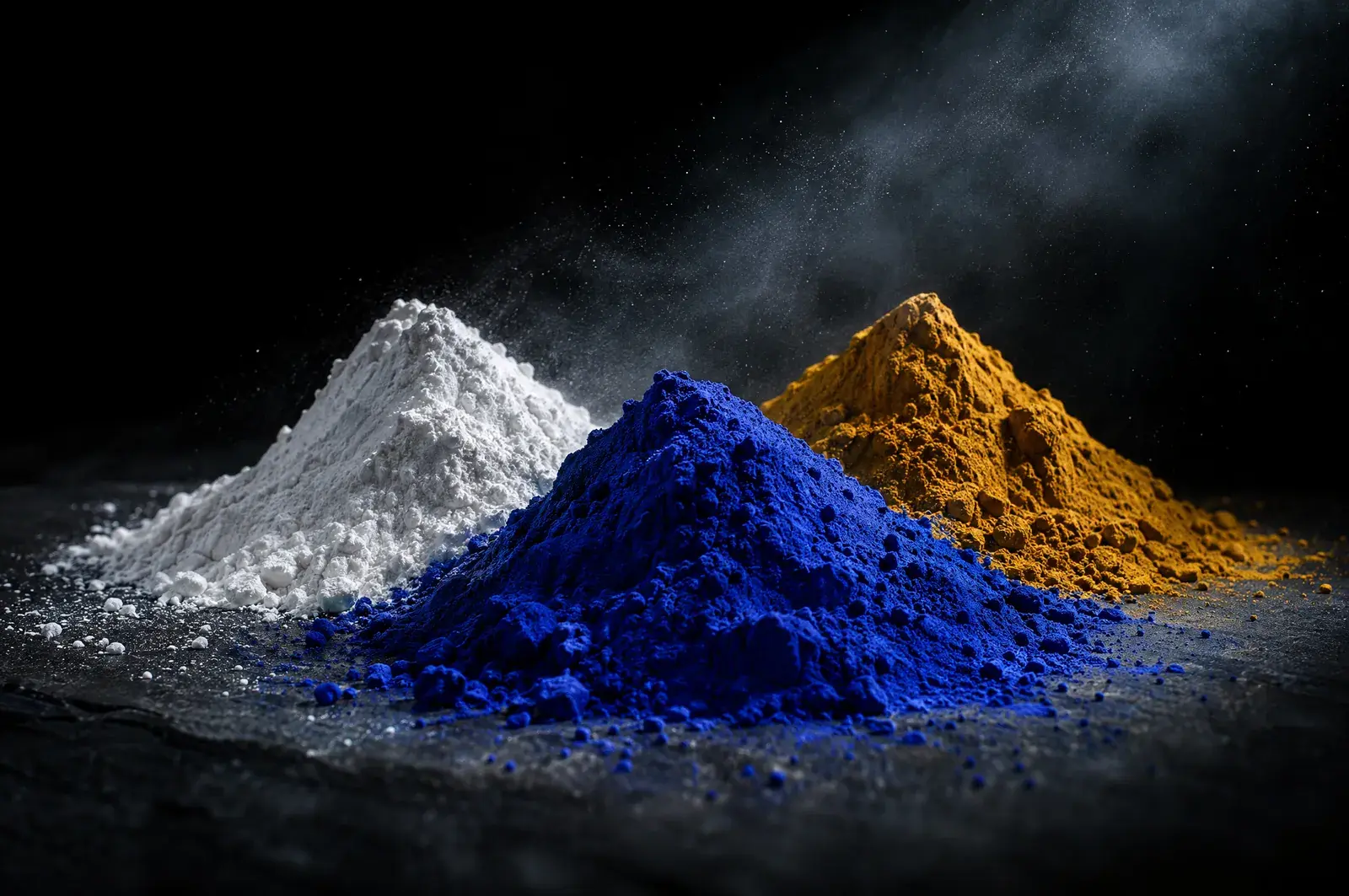
Barite (Barium Sulfate, Barytes)
BaSO4 / Barite
CAS7727-43-7FormulaBaO4S
Barite (Barium Sulfate, Barytes) is listed in the mineral fillers & pigments family for color and pigmentation. Typical uses include Drilling-fluid weighting agent, Filler/extender, radiation shielding and coatings. It is used in personal care & cosmetics; coatings & construction; home & industrial care; oil, gas & mining; and plastics & polymers.
Part ofMineral Fillers & Extenders
- GHS signal word
- Danger
- HS code
- 2511.10
- Molecular weight
- 233.39 g/mol
- Catalog code
- CTX-7727-43-7
Properties
Typical values for reference, not a guaranteed specification.
- Solubility
- Practically insoluble in organic solvents; very slightly soluble in alkalis and in solution of many salts
- Physical Description
- Barium sulfate appears as white or yellowish odorless powder or small crystals. Mp: 1580 °C (with decomposition). Density: 4.25 -4.5 g cm-3. Insoluble in water, dilute acids, alcohol. Soluble in hot concentrated sulfuric acid. Used as a weighting mud in oil-drilling, in paints, paper coatings, linoleum, textiles, rubber. Administered internally ("barium cocktail") as a radio-opaque diagnostic aid.
- Color/Form
- Fine, heavy powder or polymorphous crystals
- Odor
- Odorless
- Taste
- Tasteless
- Boiling Point
- 1600 °C at 760 mmHg (Decomposes)
- Melting Point
- 1580 °C
- Density
- 4.25 to 4.5
- Vapor Pressure
- 0 mmHg (approx)
- Decomposition
- When heated to decomposition it emits toxic fumes of /sulfur oxides/
- pH
- 5% suspension in water is neutral to litmus paper
- Refractive Index
- Indices of refraction: 1.636 (alpha), 1.637 (beta), 1.648 (gamma)
- Other Experimental Properties
- Heat of formation: -1473.2 kJ/mol; Gibbs energy of formation: -1362.2 kJ/mol; molar entropy: 132.2 J/mol-K; molar heat capacity: 101.8 J/mol-K
- Chemical Name
- Barium sulfate (barite, barytes)
- Appearance
- White to off-white / grey powder
- Specific gravity
- 4.25–4.5 (PubChem)
- Grades
- API 13A drilling; micronized filler/extender; high-density aggregate
Where it is used
- Drilling-fluid weighting agent
- Filler/extender
- Radiation shielding
- Coatings
Functions and markets
What it does
Markets it serves
Hazard classification
GHS classification as listed by PubChem for this compound.
Signal word: Danger- IrritantGHS07
- Health HazardGHS08
- H332Harmful if inhaledShare of notifications: 16.6%
- H402Harmful to aquatic life
- H412Harmful to aquatic life with long lasting effects
- H302Harmful if swallowedShare of notifications: 16.6%
- H372Causes damage to organs through prolonged or repeated exposure
Precautionary statement codes: P260, P264, P270, P273, P319, P501, P261, P271, P301+P317, P304+P340, P317, P330
Reported as not meeting GHS hazard criteria by 1648 of 1811 notifying companies.
Source: PubChem, compound CID 24414, Safety and Hazards: GHS Classification
Transport and tariff
Six-digit international heading; national tariff lines add further digits. Confirm transport classification against section 14 of the safety data sheet before shipping.
Chemical identity
- IUPAC name
- barium(2+) sulfate
- INCI name
- CI 77120
- CosIng functions
- Colorant
- InChIKey
- TZCXTZWJZNENPQ-UHFFFAOYSA-L
- Substance type
- Pure compound
- EC number
- 231-784-4
- PubChem CID
- 24414
Also known as
Documents
- Technical data sheetSent on request with your quote
- Safety data sheetSent on request, and with the first shipment
- Certificate of analysisIssued per lot with each shipment
For reference only. Properties, identifiers, hazard, transport and tariff data on this page are typical values compiled from public sources such as PubChem and ECHA. They are not a guaranteed specification: the certificate of analysis for the lot and the current safety data sheet govern. Supplied for industrial and professional use. Record updated 2026-10-05.
Related materials
- Mineral Fillers & Pigments
FD&C Red No. 4 (Ponceau SX, C.I. 14700)
CAS 4548-53-2C18H14N2Na2O7S2Textile dyeing, Paper and soap, Wood staining
Color / PigmentationView details - Mineral Fillers & Pigments
Kaolin (China Clay, White clay)
CAS 1332-58-7Al2H4O9Si2Paper, Ceramics, Paint extender
Color / PigmentationSlip / Release+1View details - Mineral Fillers & Pigments
Magnesium Hydroxide (MDH)
CAS 1309-42-8H2MgO2Flame retardant, Acid neutralization, Wastewater treatment
Flame RetardancyView details - Mineral Fillers & Pigments
Boron Nitride (BN, hBN)
CAS 10043-11-5BNSolid lubricant, Thermal management, Refractory/foundry
LubricationSlip / ReleaseView details