
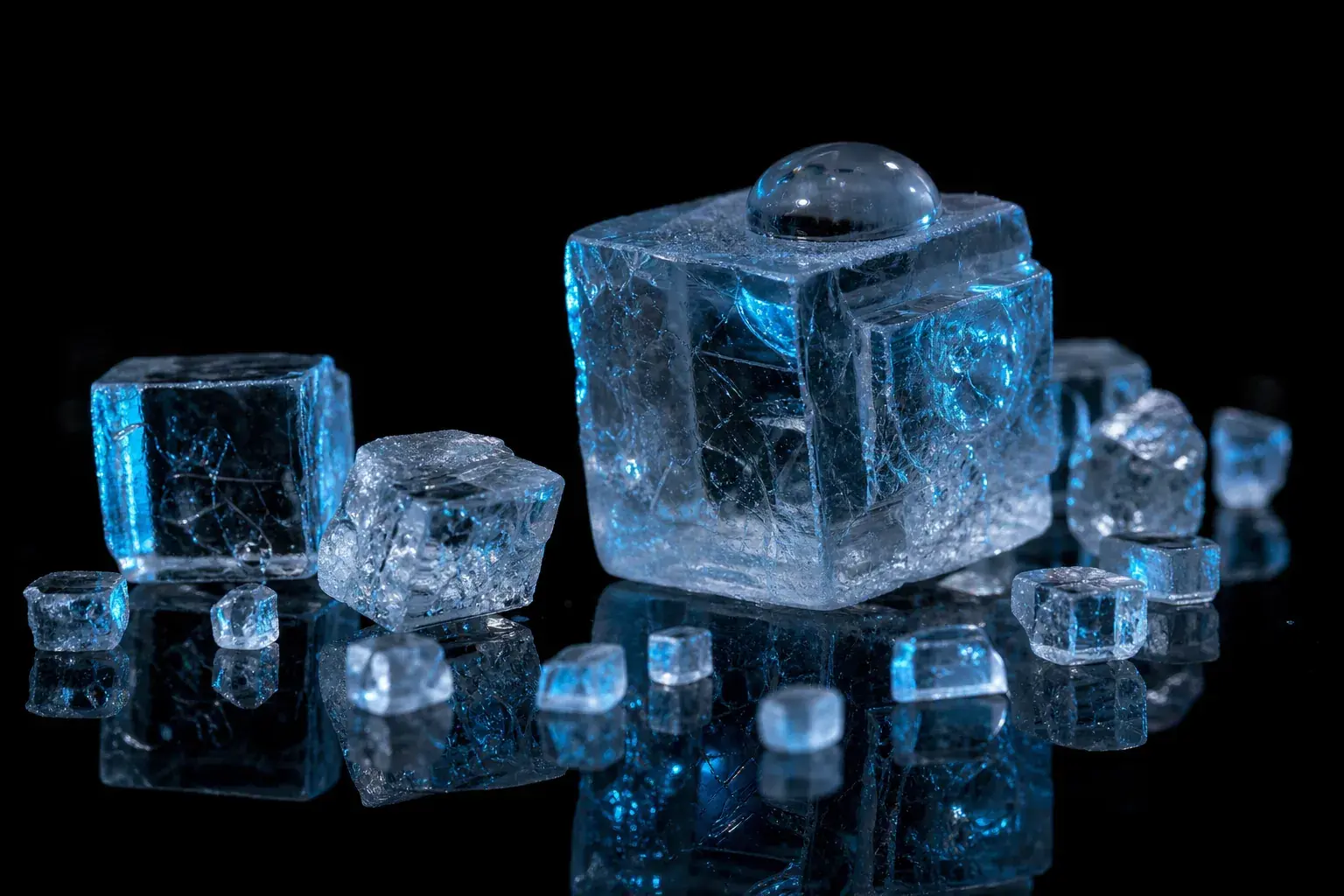
Boric Acid (Orthoboric Acid)
BORIC ACID
CAS10043-35-3FormulaBH3O3
Boric Acid (Orthoboric Acid) is listed in the acids & salts family for flame retardancy and synthesis intermediate. Typical uses include glass and glass fiber, metallurgical flux, flame retardant, wood preservation and electroplating. It is used in coatings & construction, industrial manufacturing and plastics & polymers. Appearance: colorless, transparent crystals or white granules or powder.
Part ofFlame Retardant SystemsMetalworking Amine Emulsifiers & pH Buffers
- GHS signal word
- Danger
- HS code
- 2810.00
- Molecular weight
- 61.84 g/mol
- Catalog code
- CTX-10043-35-3
Properties
Typical values for reference, not a guaranteed specification.
- Solubility
- Water solubility: 2.52% at 0 °C; 3.49% at 10 °C; 4.72% at 20 °C; 6.23% at 30 °C; 8.08% at 40 °C; 10.27% at 50 °C; 12.97% at 60 °C; 15.75% at 70 °C; 19.10% at 80 °C; 23.27% at 90 °C; 27.53% at 100 °C
- Physical Description
- Colourless, odourless, transparent crystals or white granules or powder; slightly unctuous to the touch; occurs in nature as the mineral sassolite
- Appearance
- Colorless, transparent crystals or white granules or powder
- Odor
- Odorless
- Taste
- Faintly bitter
- Boiling Point
- 300 °C at 760 mmHg (decomposes)
- Melting Point
- 171 °C
- Density
- 1.435 at 20 °C
- Vapor Pressure
- 1.6X10⁻⁶ mm Hg at 25 °C (2.136X10⁻⁴ Pa); log P (in Pa) = 26.83
- LogP
- log Kow = 0.175
- pH
- 3,8-4,8 (3,3 % aqueous solution)
- Refractive Index
- Index of refraction: 1.337, 1.461, 1.462
- Dissociation Constants
- Ka = 5.80X10⁻¹⁰ at 25 °C (pKa = 9.24)
- Chemical / class
- Inorganic boron compound
Where it is used
- Glass and glass fiber
- Metallurgical flux
- Flame retardant
- Wood preservation
- Electroplating
Functions and markets
What it does
Markets it serves
Hazard classification
GHS classification as listed by PubChem for this compound.
Signal word: Danger- IrritantGHS07
- Health HazardGHS08
- H315Causes skin irritation
- H335May cause respiratory irritation
- H370Causes damage to organs
- H360FDMay damage fertility; May damage the unborn child
- H360May damage fertility or the unborn childShare of notifications: 100%
- H402Harmful to aquatic life
- H303May be harmful if swallowed
- H372Causes damage to organs through prolonged or repeated exposure
- H319Causes serious eye irritation
Precautionary statement codes: P203, P260, P261, P264, P264+P265, P270, P271, P280, P301+P317, P302+P352, P304+P340, P305+P351+P338, P308+P316, P318, P319, P321, P332+P317, P337+P317, P362+P364, P403+P233, P405, P501, P273
Source: PubChem, compound CID 7628, Safety and Hazards: GHS Classification
Transport and tariff
Six-digit international heading; national tariff lines add further digits. Confirm transport classification against section 14 of the safety data sheet before shipping.
Chemical identity
- IUPAC name
- boric acid
- INCI name
- BORIC ACID
- CosIng functions
- Antimicrobial, Buffering, Denaturant
- InChIKey
- KGBXLFKZBHKPEV-UHFFFAOYSA-N
- Substance type
- Pure compound
- EC number
- 233-139-2
- PubChem CID
- 7628
Also known as
Documents
- Technical data sheetSent on request with your quote
- Safety data sheetSent on request, and with the first shipment
- Certificate of analysisIssued per lot with each shipment
For reference only. Properties, identifiers, hazard, transport and tariff data on this page are typical values compiled from public sources such as PubChem and ECHA. They are not a guaranteed specification: the certificate of analysis for the lot and the current safety data sheet govern. Supplied for industrial and professional use. Record updated 2026-10-05.
Related materials
- Acids & Salts
Phosphoric Acid (Orthophosphoric Acid)
CAS 7664-38-2H3O4PMetal treatment, Fertilizers, Water treatment
Cleaning / DegreasingCorrosion Inhibition+2View details - Acids & Salts
Potassium Chloride (MOP, Muriate of Potash)
CAS 7447-40-7ClKFertilizer, Potassium chemicals, Oilfield fluids
Viscosity ModificationView details - Acids & Salts
Sodium Gluconate
CAS 527-07-1C6H11NaO7Cleaning, Construction, Metal treatment
Chelation / SequestrationCleaning / Degreasing+2View details - Acids & Salts
Ammonium Hydroxide (Aqueous Ammonia)
CAS 1336-21-6H5NOpH adjustment, Cleaning & detergents, Water treatment
Cleaning / DegreasingpH AdjustmentView details