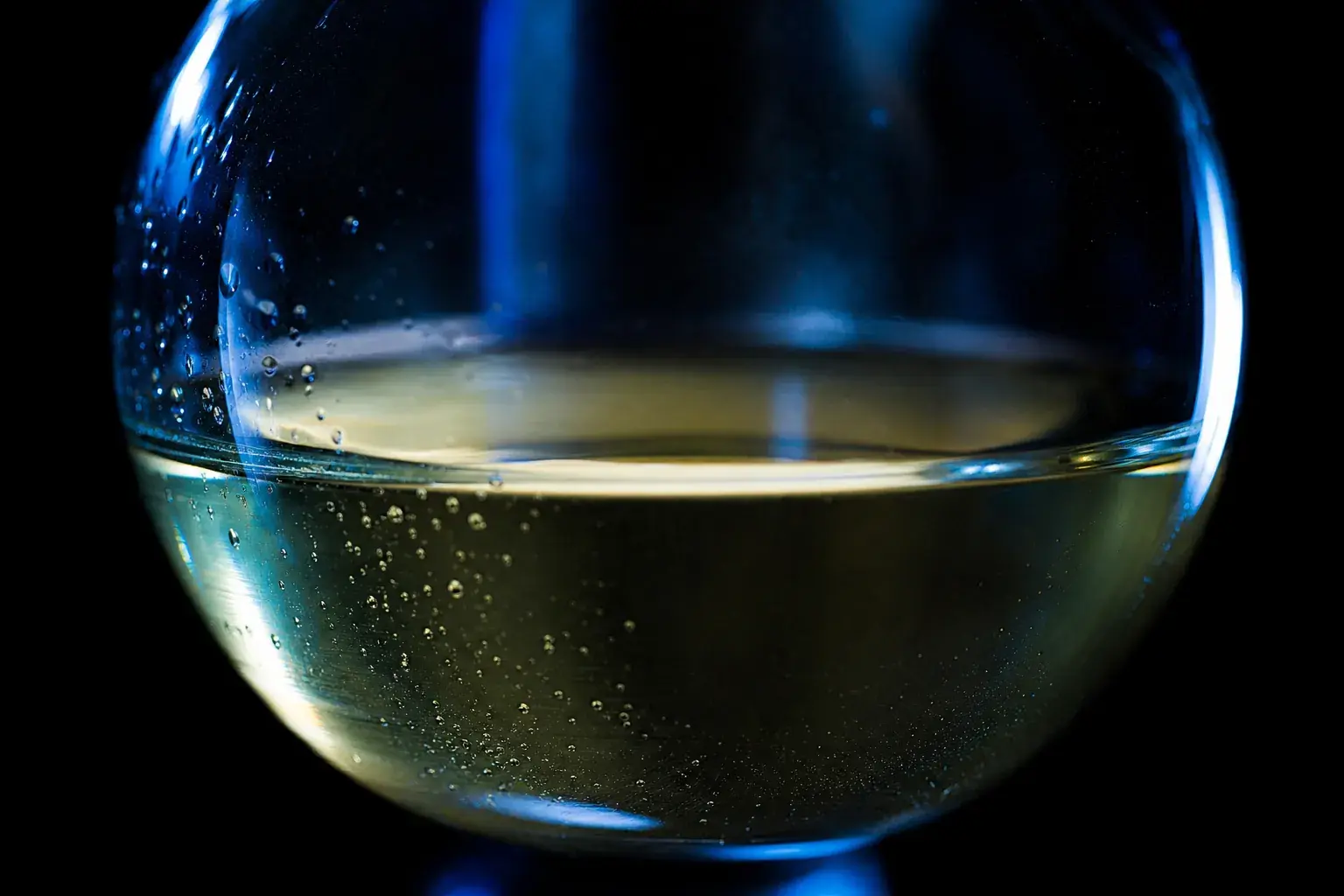
Dimethyl Sulfoxide (DMSO)
DMSO
CAS67-68-5FormulaC2H6OS
Dimethyl Sulfoxide (DMSO) is listed in the oxygenated solvents family for solvency. Typical uses include chemical synthesis, electronics, paint stripping, cryopreservation and extraction. It is used in agriculture, personal care & cosmetics, home & industrial care and industrial manufacturing. Appearance: very hygroscopic liquid.
- GHS signal word
- Warning
- HS code
- 2930.90
- Molecular weight
- 78.14 g/mol
- Catalog code
- CTX-67-68-5
Properties
Typical values for reference, not a guaranteed specification.
- Solubility
- Soluble in ethanol, acetone, ether, carbon tetrachloride, ethyl acetate
- Physical Description
- Dimethyl sulfoxide appears as a clear liquid, essentially odorless. Closed cup flash point 89 °C. Vapors are heavier than air. Contact with the skin may cause stinging and burning and lead to an odor of garlic on the breath. An excellent solvent that can transport toxic solutes through the skin. High vapor concentrations may cause headache, dizziness, and sedation
- Appearance
- Very hygroscopic liquid
- Odor
- Distinctive garlic or oyster-like odor
- Taste
- Slightly bitter taste with sweet after-taste
- Boiling Point
- 189.00 to 190.00 °C. @ 760.00 mm Hg
- Melting Point
- 18 °C
- Flash Point
- 95 °C (Open cup)
- Density
- 1.101 at 20 °C
- Vapor Density
- 2.71
- Vapor Pressure
- Vapor pressure, Pa at 20 °C: 59.4
- LogP
- -1.35 (calculated)
- Henry's Law Constant
- Henry's Law constant = 1.031X10⁻⁸ atm-cu m/mol at 25 °C
- Autoignition Temperature
- 215 °C
- Viscosity
- 1.95 mm²/s at 20 °C
- Heat Of Combustion
- -10,890 Btu/lb = -6050 Cal/g
- Heat of Vaporization
- 47.3 kJ/mol at 70 °C
- Refractive Index
- Index of refraction: 1.4783 at 20 °C/D
- Dissociation Constants
- pKa = 35.1
Where it is used
- Chemical synthesis
- Electronics
- Paint stripping
- Cryopreservation
- Extraction
Functions and markets
What it does
Markets it serves
Hazard classification
GHS classification as listed by PubChem for this compound.
Signal word: Warning- IrritantGHS07
- Health HazardGHS08
- H335May cause respiratory irritationShare of notifications: 13.8%
- H371May cause damage to organs
- H319Causes serious eye irritationShare of notifications: 33.6%
- H315Causes skin irritationShare of notifications: 28.4%
- H227Combustible liquid
Precautionary statement codes: P210, P260, P264, P270, P280, P308+P316, P370+P378, P403, P405, P501, P261, P264+P265, P271, P302+P352, P304+P340, P305+P351+P338, P319, P321, P332+P317, P337+P317, P362+P364, P403+P233
Source: PubChem, compound CID 679, Safety and Hazards: GHS Classification
Transport and tariff
Six-digit international heading; national tariff lines add further digits. Confirm transport classification against section 14 of the safety data sheet before shipping.
Chemical identity
- IUPAC name
- methylsulfinylmethane
- INCI name
- DMSO
- CosIng functions
- Solvent
- InChIKey
- IAZDPXIOMUYVGZ-UHFFFAOYSA-N
- Substance type
- Pure compound
- EC number
- 200-664-3
- PubChem CID
- 679
Also known as
Documents
- Technical data sheetSent on request with your quote
- Safety data sheetSent on request, and with the first shipment
- Certificate of analysisIssued per lot with each shipment
For reference only. Properties, identifiers, hazard, transport and tariff data on this page are typical values compiled from public sources such as PubChem and ECHA. They are not a guaranteed specification: the certificate of analysis for the lot and the current safety data sheet govern. Supplied for industrial and professional use. Record updated 2026-10-02.
Related materials
- Oxygenated Solvents
Acetone (Propanone, Methyl ketone, 2-propanone)
CAS 67-64-1C3H6OSolvent, Chemical intermediate, Cleaning & degreasing
Cleaning / DegreasingSolvency+1View details - Oxygenated Solvents
Ethanol (Ethyl Alcohol, EtOH)
CAS 64-17-5C2H6OIndustrial solvent, Chemical intermediate, Fuel component
Biocidal ActionCleaning / Degreasing+3View details - Amines & Amides
N-Methyl-2-Pyrrolidone (NMP)
CAS 872-50-4C5H9NOResin and polymer solvent, Paint stripping, Microelectronics
Cleaning / DegreasingSolvencyView details - Oxygenated Solvents
n-Butyl Acetate (Butyl Acetate)
CAS 123-86-4C6H12O2Coatings solvent, Printing inks, Films & adhesives
Cleaning / DegreasingSolvencyView details