
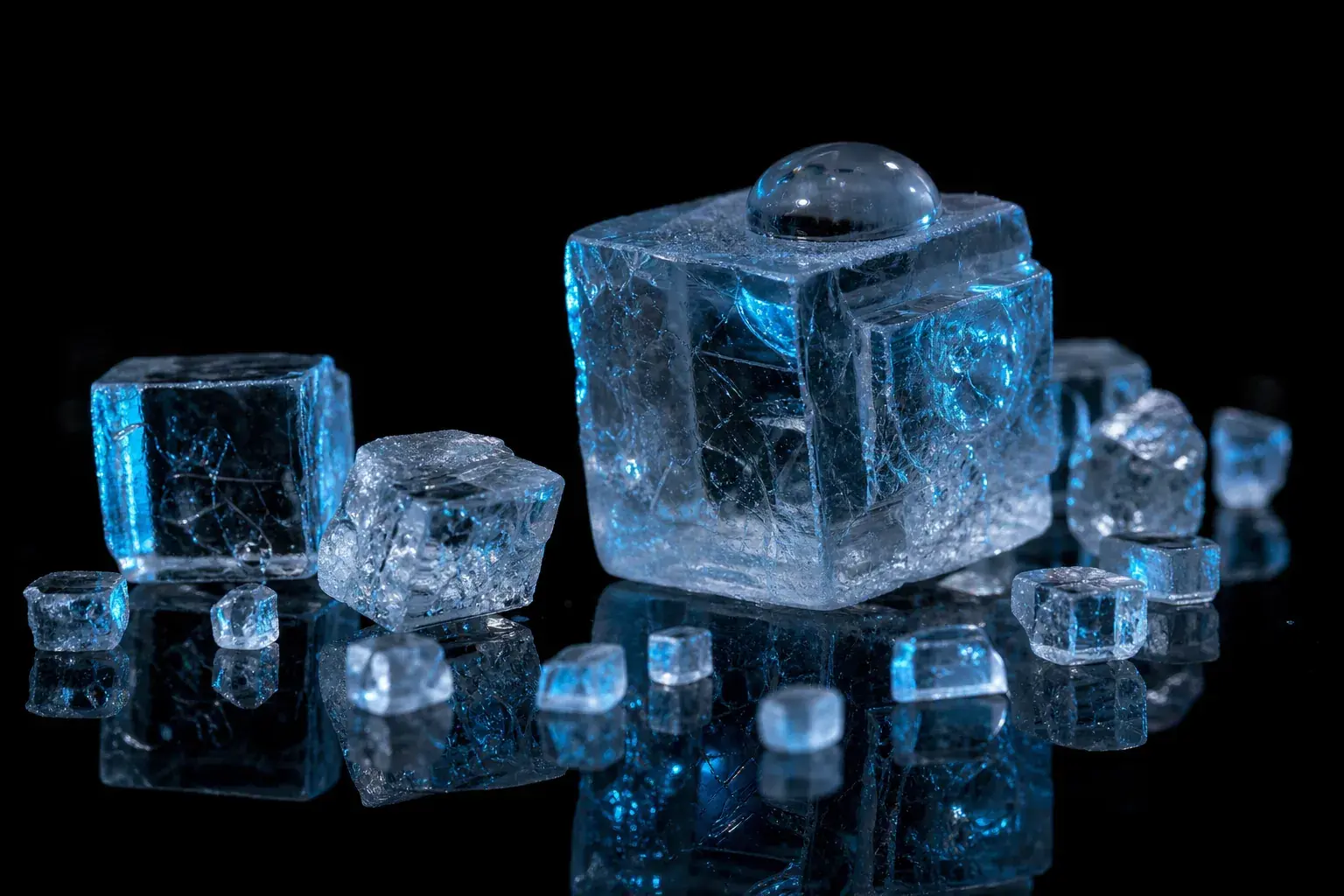
Magnesium Chloride
MgCl2
CAS7786-30-3FormulaCl2Mg
Magnesium Chloride (MgCl2, CAS 7786-30-3) is listed in the acids & salts family for moisture control and viscosity modification. Typical uses include De-icing and dust control, oxychloride cement, fertilizer and feed and boiler scale control. It is used in personal care & cosmetics; coatings & construction; food & beverage; industrial manufacturing; oil, gas & mining; and 2 more. Appearance: thin white to gray granules and/or flakes.
Part ofResin Finishing Systems
- GHS signal word
- Danger
- HS code
- 2827.31
- Molecular weight
- 95.21 g/mol
- Catalog code
- CTX-7786-30-3
Properties
Typical values for reference, not a guaranteed specification.
- Solubility
- In methanol, 15.5 g/100 g @ 0 °C, 20.4 g/100 g @ 60 °C; in ethanol, 3.61 g/100 g @ 0 °C, 15.89 g/100 g @ 60 °C
- Physical Description
- Liquid, wet solid, dry powder, solid, or pellets or crystals
- Appearance
- Thin white to gray granules and/or flakes
- Boiling Point
- 1,412 °C
- Melting Point
- 712 °C (rapid heating)
- Density
- 2.3 g/cm³
- Refractive Index
- INDEX OF REFRACTION: 1.675, 1.59
Grades in this range
| Form | Typical MgCl2 % | Best use |
|---|---|---|
| Hexahydrate flake | ~46–47% | De-icing, dust control, oxychloride cement, general dissolving |
| Anhydrous powder/granule | ~99% | High-assay feedstock, electrolysis, low-water-tolerance chemistry |
| Liquid brine | ~28–32% | Spray anti-icing and unpaved-road dust control, ready to apply |
| Pellet | ~46–48% | Free-flowing spreader feed, less caking than flake in storage |
Where it is used
- De-icing and dust control
- Oxychloride cement
- Fertilizer and feed
- Boiler scale control
Functions and markets
What it does
Markets it serves
Hazard classification
GHS classification as listed by PubChem for this compound.
Signal word: Danger- IrritantGHS07
- CorrosiveGHS05
- H302Harmful if swallowedShare of notifications: 27.6%
- H319Causes serious eye irritationShare of notifications: 11.8%
- H318Causes serious eye damageShare of notifications: 27.6%
- H335May cause respiratory irritationShare of notifications: 10.9%
- H315Causes skin irritationShare of notifications: 37.6%
- H290May be corrosive to metalsShare of notifications: 27.6%
Precautionary statement codes: P234, P261, P264, P264+P265, P270, P271, P280, P301+P317, P302+P352, P304+P340, P305+P351+P338, P305+P354+P338, P317, P319, P321, P330, P332+P317, P337+P317, P362+P364, P390, P403+P233, P405, P406, P501
Source: PubChem, compound CID 5360315, Safety and Hazards: GHS Classification
Transport and tariff
Six-digit international heading; national tariff lines add further digits. Confirm transport classification against section 14 of the safety data sheet before shipping.
Chemical identity
- IUPAC name
- magnesium dichloride
- INCI name
- MAGNESIUM CHLORIDE
- CosIng functions
- Viscosity controlling
- InChIKey
- TWRXJAOTZQYOKJ-UHFFFAOYSA-L
- Substance type
- Pure compound
- EC number
- 232-094-6
- PubChem CID
- 5360315
Also known as
Documents
- Technical data sheetSent on request with your quote
- Safety data sheetSent on request, and with the first shipment
- Certificate of analysisIssued per lot with each shipment
For reference only. Properties, identifiers, hazard, transport and tariff data on this page are typical values compiled from public sources such as PubChem and ECHA. They are not a guaranteed specification: the certificate of analysis for the lot and the current safety data sheet govern. Supplied for industrial and professional use. Record updated 2026-10-02.
Related materials
- Acids & Salts
Calcium Chloride
CAS 10043-52-4CaCl2De-icing & dust control, Desiccant, Oil & gas
Moisture ControlViscosity ModificationView details - Acids & Salts
Diammonium Phosphate (DAP)
CAS 7783-28-0H9N2O4PFertilizer, Fermentation, Flame retardant
Flame RetardancypH AdjustmentView details - Acids & Salts
Sodium Carbonate (Soda Ash, Calcined soda)
CAS 497-19-8CNa2O3Glass manufacturing, Detergents & cleaners, pH & alkalinity control
Cleaning / DegreasingpH AdjustmentView details - Acids & Salts
Magnesium Stearate
CAS 557-04-0C36H70MgO4Tableting and powders, Plastics, Cosmetics
LubricationSlip / Release+1View details