Sodium Chloride (Industrial Salt)
SODIUM CHLORIDE
CAS7647-14-5FormulaClNa
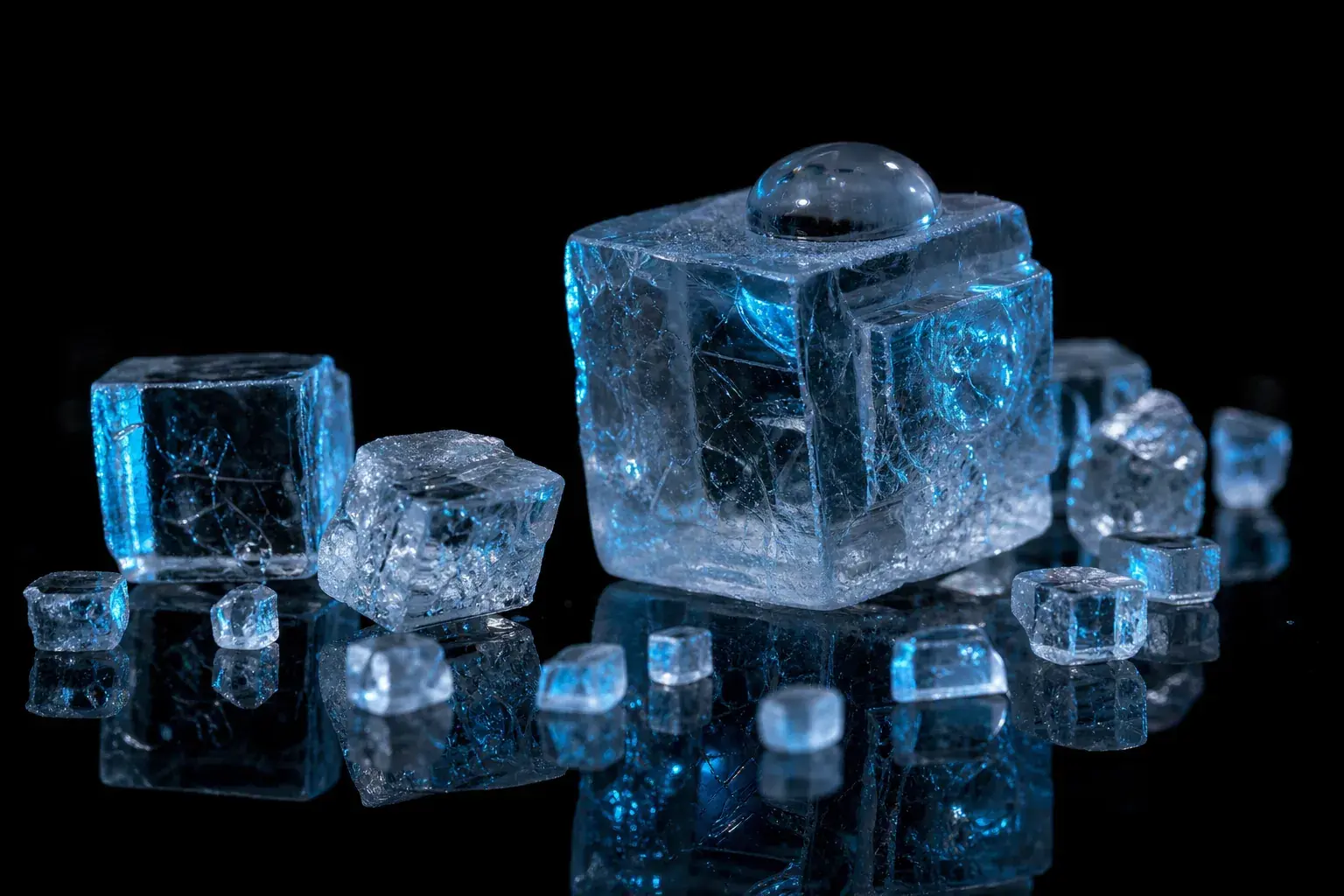
Sodium Chloride (Industrial Salt) is listed in the acids & salts family for preservation, synthesis intermediate, thickening and rheology and viscosity modification. Typical uses include leather processing, brine and water treatment, Chlor-alkali feedstock and De-icing. It is used in personal care & cosmetics; food & beverage; oil, gas & mining; textiles; and water treatment. Appearance: colorless and transparent or translucent when in large crystals.
Part ofReactive Dye AuxiliariesRheology Modifiers & Thickeners
- GHS signal word
- Warning
- HS code
- 2501.00
- Molecular weight
- 58.44 g/mol
- Catalog code
- CTX-7647-14-5
Properties
Typical values for reference, not a guaranteed specification.
- Solubility
- 0.065 g/100 g ethanol at 25 °C, 7.15 g/100 g ethylene glycol at 25 °C, 5.21 g/100 g formic acid at 25 °C, 10 g/100 g glycerol at 25 °C, 2.15 g /100 g liquid ammonia at -40 °C, 1.40 g/100g methanol at 25 °C, 1.86 g/100 g monoethanolamine at 25 °C /Table/
- Physical Description
- Dry powder, solid, liquid, wet solid, or pellets or crystals
- Appearance
- Colorless and transparent or translucent when in large crystals
- Taste
- SRP: SALTY
- Boiling Point
- 1465 °C
- Melting Point
- 800.7 °C
- Density
- Enthalpy of formation: -410.9 kJ/mol at 25 °C; Density of molten sodium chloride at 850 °C: 1.549 g/cu cm; latent heat of fusion: 0.52 kJ/g
- Vapor Pressure
- VP: 1 mm Hg at 865 °C
- Viscosity
- Viscosity of saturated aqueous solution = 1.93 mPa-s
- Corrosivity
- Sodium chloride solutions are corrosive to base metals
- pH
- pH = 6.7 to 7.3; its aqueous solution is neutral
- Surface Tension
- 110 mN/m at 850 °C /Molten sodium chloride/
- Refractive Index
- Index of refraction: 1.5442 /Table/
Where it is used
- Leather processing
- Brine and water treatment
- Chlor-alkali feedstock
- De-icing
Functions and markets
What it does
Markets it serves
Hazard classification
GHS classification as listed by PubChem for this compound.
Signal word: Warning- IrritantGHS07
- CorrosiveGHS05
- H412Harmful to aquatic life with long lasting effects
- H319Causes serious eye irritationShare of notifications: 10.8%
- H318Causes serious eye damage
Precautionary statement codes: P264+P265, P280, P305+P351+P338, P337+P317, P273, P305+P354+P338, P317, P501
Source: PubChem, compound CID 5234, Safety and Hazards: GHS Classification
Transport and tariff
Six-digit international heading; national tariff lines add further digits. Confirm transport classification against section 14 of the safety data sheet before shipping.
Chemical identity
- IUPAC name
- sodium chloride
- INCI name
- SODIUM CHLORIDE
- CosIng functions
- Bulking, Fragrance, Oral care, Viscosity controlling
- InChIKey
- FAPWRFPIFSIZLT-UHFFFAOYSA-M
- Substance type
- Pure compound
- EC number
- 231-598-3
- PubChem CID
- 5234
Also known as
Documents
- Technical data sheetSent on request with your quote
- Safety data sheetSent on request, and with the first shipment
- Certificate of analysisIssued per lot with each shipment
For reference only. Properties, identifiers, hazard, transport and tariff data on this page are typical values compiled from public sources such as PubChem and ECHA. They are not a guaranteed specification: the certificate of analysis for the lot and the current safety data sheet govern. Supplied for industrial and professional use. Record updated 2026-07-15.
Related materials
- Amines & Amides
Oleamide (Oleic Acid Amide)
CAS 301-02-0C18H35NOSlip agent, Mold release, Lubricant additive
ConditioningEmolliency+3View details - Acids & Salts
Ferulic Acid (4-Hydroxy-3-methoxycinnamic Acid)
CAS 1135-24-6C10H10O4Food preservation, Analytical chemistry, Personal care
Biocidal ActionPreservation+1View details - Acids & Salts
Acrylic Acid (AA)
CAS 79-10-7C3H4O2Monomer, Acrylate esters, Superabsorbents
Synthesis IntermediateView details - Acids & Salts
Sodium Tetraborate Decahydrate (Borax)
CAS 1303-96-4B4H20Na2O17Glass and ceramics, Cleaning chemistry, Flame retardant
Synthesis IntermediateView details