
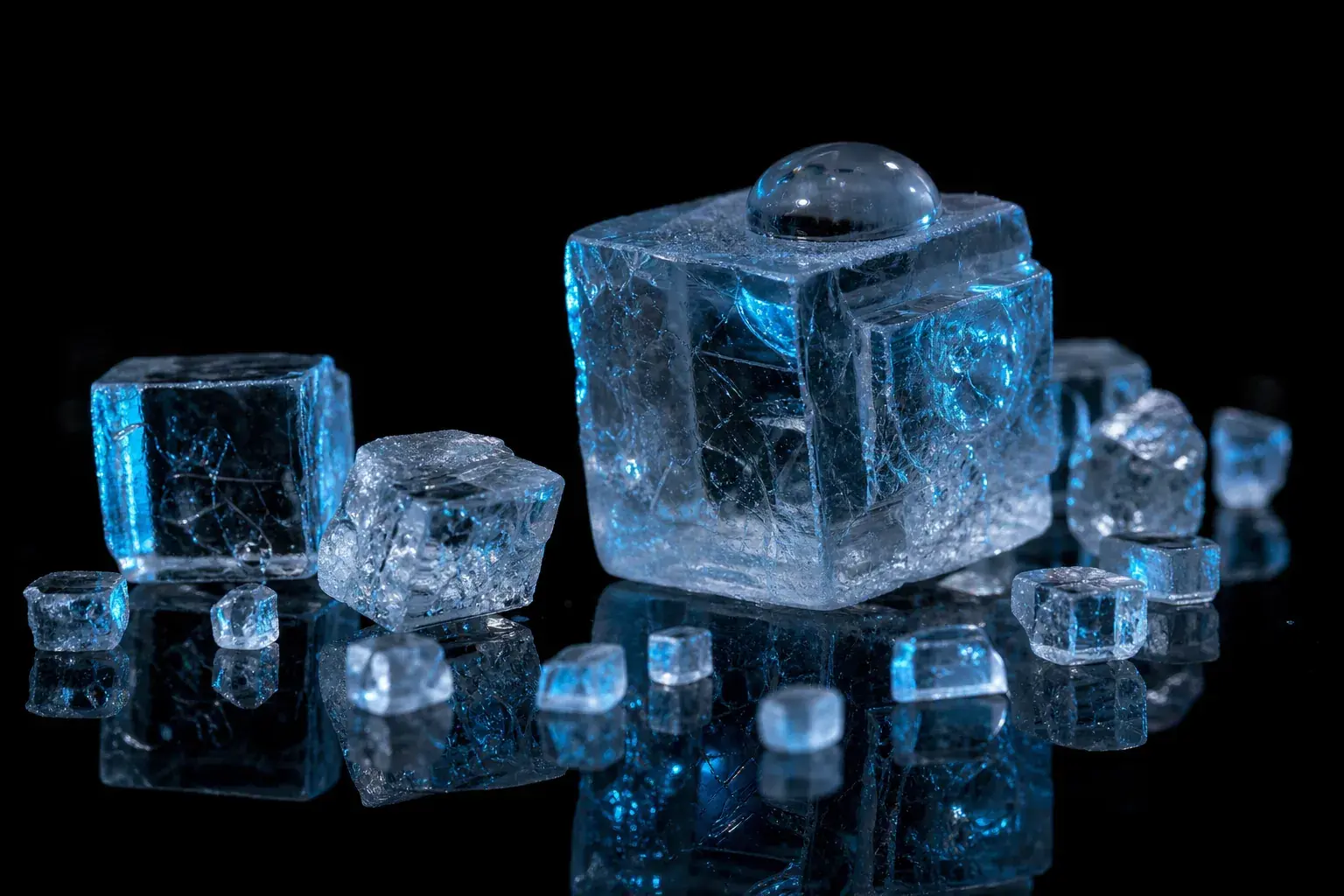
Sodium Silicate Solution (Water Glass)
Na2SiO3 / Water Glass
CAS1344-09-8FormulaNa2O3Si
Sodium Silicate Solution (Water Glass) is listed in the acids & salts family for cleaning and degreasing, corrosion inhibition, film formation and pH adjustment. Typical uses include adhesives and binders, detergents, foundry, construction and silica and zeolite feedstock. It is used in personal care & cosmetics; coatings & construction; home & industrial care; industrial manufacturing; oil, gas & mining; and 3 more.
Part ofScouring & Bleaching ChemicalsReactive Dye AuxiliariesAlkaline Builders & pH Adjusters
- GHS signal word
- Danger
- HS code
- 2839.19
- Molecular weight
- 122.063 g/mol
- Catalog code
- CTX-1344-09-8
Properties
Typical values for reference, not a guaranteed specification.
- Solubility
- VERY SOL IN COLD & HOT WATER; SOLUBLE IN DILUTE SODIUM HYDROXIDE; INSOLUBLE IN ALCOHOL, ACIDS /NONAHYDRATE/
- Melting Point
- 1089 °C
- Boiling Point
- BOILING POINT: 100 °C -6H20 /NONAHYDRATE/
- Density
- 1.1 to 1.7 at 20 °C
- pH
- PH: ABOUT 12.5; HAS RELATIVELY HIGH BUFFER CAPACITY /0.5% SOLUTION/
Grades in this range
| SiO2:Na2O weight ratio | Character | Typical form | Where it fits |
|---|---|---|---|
| ~2.0 | More alkaline, highly soluble | Liquid or spray-dried powder | Detergents, soaps, heavy-duty cleaning, alkaline builders |
| ~2.5 | Balanced alkalinity and binding | Liquid or powder | General-purpose cleaning, paper and board, mid-duty binders |
| ~3.2–3.3 | Less alkaline, stronger film and gel | Liquid (most common) | Adhesives, deflocculation, foundry cores, sealing and densifying |
Where it is used
- Adhesives and binders
- Detergents
- Foundry
- Construction
- Silica and zeolite feedstock
Functions and markets
What it does
Markets it serves
Hazard classification
GHS classification as listed by PubChem for this compound.
Signal word: Danger- IrritantGHS07
- Health HazardGHS08
- CorrosiveGHS05
- H335May cause respiratory irritation
- H314Causes severe skin burns and eye damageShare of notifications: > 99.9%
- H319Causes serious eye irritationShare of notifications: 28%
- H318Causes serious eye damageShare of notifications: 13.9%
- H315Causes skin irritationShare of notifications: 72.6%
- H302Harmful if swallowedShare of notifications: 24.1%
- H290May be corrosive to metalsShare of notifications: 13.9%
- H371May cause damage to organs
Precautionary statement codes: P234, P260, P261, P264, P264+P265, P270, P271, P280, P301+P317, P301+P330+P331, P302+P352, P302+P361+P354, P304+P340, P305+P351+P338, P305+P354+P338, P316, P317, P319, P321, P330, P332+P317, P337+P317, P362+P364, P363, P390, P403+P233, P405, P406, P501, P308+P316
Source: PubChem, compound CID 23266, Safety and Hazards: GHS Classification
Transport and tariff
Six-digit international heading; national tariff lines add further digits. Confirm transport classification against section 14 of the safety data sheet before shipping.
Chemical identity
- IUPAC name
- disodium;dioxido(oxo)silane
- INCI name
- SODIUM SILICATE
- CosIng functions
- Anticorrosive, Buffering
- InChIKey
- NTHWMYGWWRZVTN-UHFFFAOYSA-N
- Substance type
- Pure compound
- EC number
- 215-687-4
- PubChem CID
- 23266
Also known as
Documents
- Technical data sheetSent on request with your quote
- Safety data sheetSent on request, and with the first shipment
- Certificate of analysisIssued per lot with each shipment
For reference only. Properties, identifiers, hazard, transport and tariff data on this page are typical values compiled from public sources such as PubChem and ECHA. They are not a guaranteed specification: the certificate of analysis for the lot and the current safety data sheet govern. Supplied for industrial and professional use. Record updated 2026-07-15.
Related materials
- Acids & Salts
Sodium Molybdate
CAS 7631-95-0MoNa2O4Corrosion inhibition, Metal finishing, Pigments
Corrosion InhibitionView details - Acids & Salts
Sodium Benzoate (Benzoate of Soda)
CAS 532-32-1C7H5NaO2Preservative, Corrosion inhibitor, Coatings
Biocidal ActionCorrosion Inhibition+1View details - Acids & Salts
Sodium Thiosulfate
CAS 7772-98-7Na2O3S2Dechlorination, Photographic fixer, Leather
PreservationView details - Acids & Salts
Glycyrrhizic Acid (Glycyrrhizin)
CAS 1405-86-3C42H62O16Sweetener, Foaming agent, Flavor/taste-masking
ConditioningPreservation+1View details