
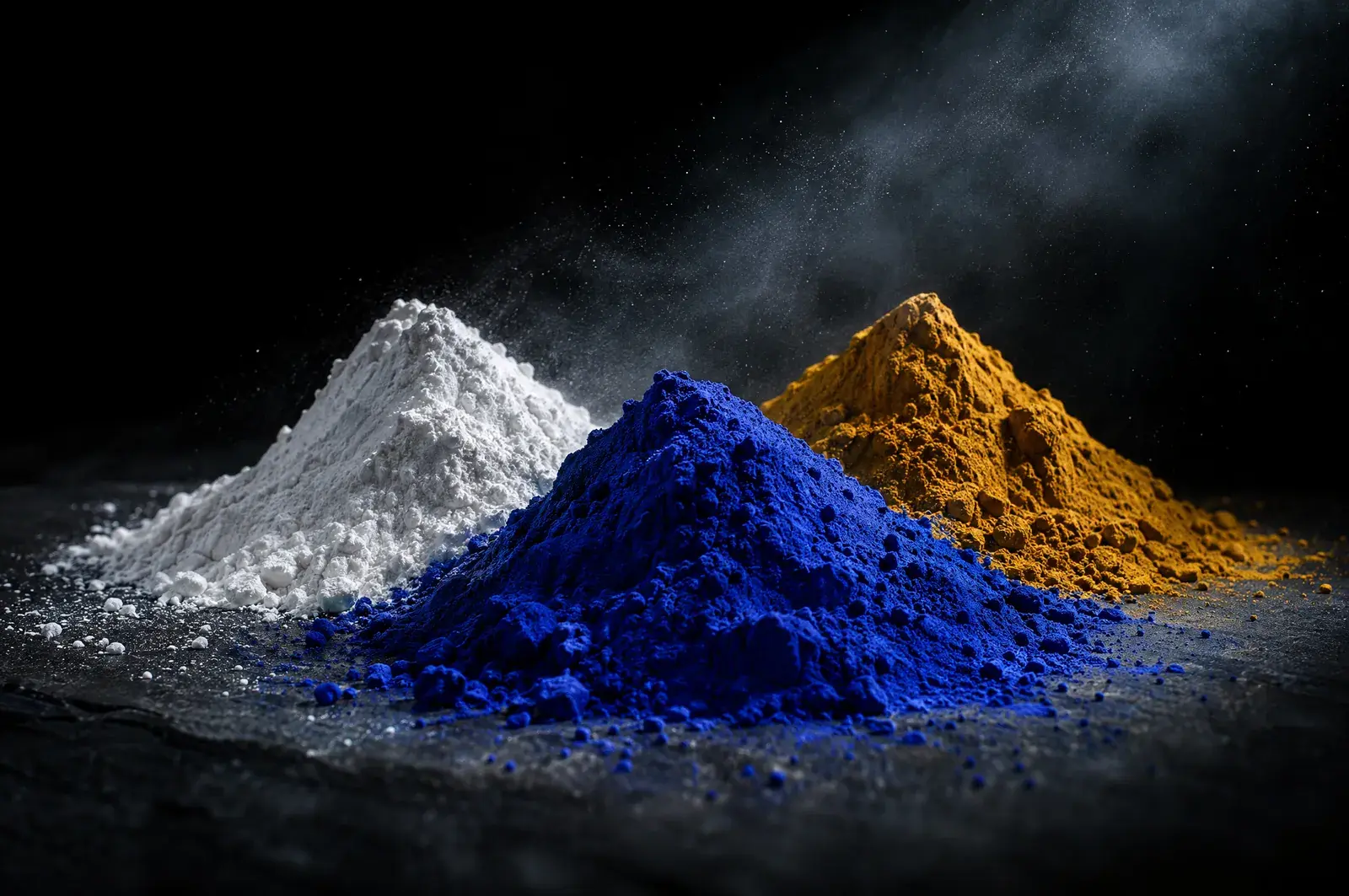
Titanium Dioxide (TiO2)
TiO2
CAS13463-67-7FormulaO2Ti
Titanium Dioxide (TiO2) is listed in the mineral fillers & pigments family for color and pigmentation and UV protection. Typical uses include coatings, plastics, paper and pulp and inks and enamels. It is used in personal care & cosmetics, coatings & construction, plastics & polymers and textiles.
Part ofMineral Fillers & PigmentsUV Protection AgentsUV Stabilizers & AntioxidantsMineral Fillers & ExtendersSensory Modifiers
- GHS signal word
- Danger
- HS code
- 2823.00
- Molecular weight
- 79.866 g/mol
- Catalog code
- CTX-13463-67-7
Properties
Typical values for reference, not a guaranteed specification.
- Solubility
- < 1 mg/mL at 20 °C
- Melting Point
- 1860 °C (decomposes)
- Boiling Point
- 4532 to 3000 °C at 760 mmHg
- Density
- 3.9 to 4.2
- Vapor Pressure
- 0 mmHg at 20 °C Essentially
- pH
- SUSPENSION IN WATER (1 IN 10) IS NEUTRAL TO LITMUS
Grades in this range
| Property | Rutile | Anatase |
|---|---|---|
| Crystal structure | Tetragonal, densely packed; thermodynamically stable form | Tetragonal, more open lattice; converts to rutile at high temperature |
| Refractive index | ~2.7 (higher) | ~2.55 (lower) |
| Opacity / hiding power | Highest — superior hide per pound | Lower hiding than rutile |
| Durability / weatherability | Excellent; resists chalking outdoors, especially surface-treated grades | Limited; chalks faster in exterior exposure |
| UV / photoactivity | Lower photoactivity; preferred where coating durability is critical | Higher photoactivity; can accelerate binder breakdown in some systems |
| Whiteness / tint tone | Slightly warmer, neutral white | Bluer, brighter undertone |
| Typical uses | Architectural & industrial coatings, plastics, masterbatch, exterior systems | Paper, fibers, ceramics, interior or low-exposure applications, some specialty uses |
Where it is used
- Coatings
- Plastics
- Paper and pulp
- Inks and enamels
Functions and markets
What it does
Markets it serves
Hazard classification
GHS classification as listed by PubChem for this compound.
Signal word: Danger- IrritantGHS07
- Health HazardGHS08
- H351Suspected of causing cancerShare of notifications: 12.6%
- H335May cause respiratory irritation
- H413May cause long lasting harmful effects to aquatic life
- H320Causes eye irritation
- H372Causes damage to organs through prolonged or repeated exposure
Precautionary statement codes: P203, P260, P264, P270, P280, P318, P319, P405, P501, P273, P264+P265, P305+P351+P338, P337+P317, P261, P271, P304+P340, P403+P233
Reported as not meeting GHS hazard criteria by 274 of 304 notifying companies.
Source: PubChem, compound CID 26042, Safety and Hazards: GHS Classification
Transport and tariff
Six-digit international heading; national tariff lines add further digits. Confirm transport classification against section 14 of the safety data sheet before shipping.
Chemical identity
- IUPAC name
- dioxotitanium
- INCI name
- TITANIUM DIOXIDE
- CosIng functions
- Colorant, Opacifying, Uv absorber, Uv filter
- InChIKey
- GWEVSGVZZGPLCZ-UHFFFAOYSA-N
- Substance type
- Pure compound
- EC number
- 236-675-5
- PubChem CID
- 26042
Also known as
Documents
- Technical data sheetSent on request with your quote
- Safety data sheetSent on request, and with the first shipment
- Certificate of analysisIssued per lot with each shipment
For reference only. Properties, identifiers, hazard, transport and tariff data on this page are typical values compiled from public sources such as PubChem and ECHA. They are not a guaranteed specification: the certificate of analysis for the lot and the current safety data sheet govern. Supplied for industrial and professional use. Record updated 2026-07-15.
Related materials
- Mineral Fillers & Pigments
Magnesium Aluminum Silicate (Aluminum Magnesium Silicate)
CAS 1327-43-1AlMgO4Si+Rheology modifier, Suspending agent, Anticaking
Thickening / RheologyViscosity ModificationView details - Mineral Fillers & Pigments
FD&C Blue 1 Aluminum Lake (Brilliant Blue FCF, CI 42090, Brillant blue)
CAS 68921-42-6C37H36N2O9S3Food colorant, Cosmetic colorant, Pharmaceutical coloring
Color / PigmentationView details - Mineral Fillers & Pigments
Boron Nitride (BN, hBN)
CAS 10043-11-5BNSolid lubricant, Thermal management, Refractory/foundry
LubricationSlip / ReleaseView details - Mineral Fillers & Pigments
FD&C Red 40 (Allura Red AC)
CAS 25956-17-6C18H14N2Na2O8S2Food coloring, Cosmetic colorant, Hair coloring
Color / PigmentationView details